REVIEW · SAN GIMIGNANO
Golden Grains & Gourmet Pasta Cooking Class
Book on Viator →Operated by Podere La Marronaia- Sosta Alle Colonne · Bookable on Viator
Fresh pasta starts with grain. This class turns Tuscany into a hands-on dinner, from milling organic flour to tasting estate wines with your finished meal, in a family-run setting just a short walk from town. I like the table-mill grain experience and the way the cooking goes step-by-step, with the chef Leonardo called out as especially patient with first-timers. The possible catch: at $378.16 per person for about 3 hours, it’s a real splurge, so it’s best when you truly want a full culinary session, not just a quick taste.
You’ll meet at Via Martiri di Citerna, 2, then head into a rustic kitchen surrounded by vineyards and olive groves. After you shape and cook traditional Tuscan pasta, you’ll eat what you made and pair it with an estate tasting of organic and biodynamic wines, extra-virgin olive oils, and balsamic vinegar—while taking in the view over San Gimignano.
In This Review
- Key highlights before you go
- Arriving at Podere La Marronaia: the setting does half the work
- Milling organic grain at the table mill: why this part is special
- Kneading, rolling, shaping: learning pasta you can actually repeat
- Sauces, bruschetta-style bites, and building a real Tuscan plate
- Wine, olive oil, and balsamic tasting with your meal
- The view over San Gimignano: the part you’ll remember later
- Price and value: what you’re really paying for
- Logistics that actually affect your day
- Who should book this cooking class (and who might skip it)
- Should you book Golden Grains & Gourmet Pasta?
- FAQ
- How long is the Golden Grains & Gourmet Pasta cooking class?
- Where does the experience start and where does it end?
- What’s included in the class?
- Is there wine and olive oil tasting?
- Is the experience suitable for beginners?
- How big is the group?
- Do I get a mobile ticket?
- What is the cancellation policy?
Key highlights before you go
- Milling three kinds of organic grains with a table mill before you start kneading
- A small group (max 6), so you get real help while you roll and shape pasta
- Hands-on pasta making from grain to finished plates
- Sauces and a more complete meal, not just a snack demo
- Estate tastings of organic and biodynamic wines, olive oil, and balsamic vinegar in the same sitting
Arriving at Podere La Marronaia: the setting does half the work
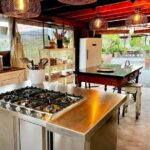
San Gimignano is beautiful from every angle, but what makes this class feel different is that you’re not stuck indoors with a cooking station and a timer. You start at a family estate, Podere La Marronaia- Sosta Alle Colonne, where the kitchen sits in a real working-food landscape—vineyards and olive groves around you, with countryside views that frame the whole experience.
The meeting point is Via Martiri di Citerna, 2, 53037 San Gimignano SI. From there, it’s a short walk to the estate. That matters because you avoid the “wait for a bus, fight for directions” feeling that can drain the start of a food tour. A mobile ticket also helps you keep things simple on arrival.
Inside, the atmosphere is rustic and welcoming. The class is structured like a meal you’re actually going to finish, not a performance. That’s a big deal if you’re worried about complicated steps or you just want to learn in a calm way.
One more practical point: this is a group experience with a maximum of 6 people. You’ll notice the difference right away—more hands-on time, less hovering, and a better chance to ask your specific questions instead of waiting your turn.
You can also read our reviews of more tours and experiences in San Gimignano.
Milling organic grain at the table mill: why this part is special
Most pasta classes start with flour already sitting in bowls. Here, you start earlier—milling grains into flour using the estate’s table mill, with three different kinds of organic grains.
Why it matters: grain-to-flour is where the lesson turns from food entertainment into real technique. When you mill the grains yourself, you get a feel for texture and moisture changes that store-bought flour can hide. It also makes you understand what “traditional” means in practical terms. You’re not just copying a shape; you’re learning the foundation.
Also, going through three grains is a quiet education in flavor. You might not have a chef’s lab vocabulary at the end, but you’ll have sensory knowledge. You’ll taste the difference later when your pasta meets sauce and oil. If you’re the type who loves food trivia, you’ll also enjoy the extra sense of connection to the ingredients. If you’re not, you’ll still appreciate that the process feels grounded, not theatrical.
And yes—this milling step sets the tone: you’re working in a way that respects the ingredients. That makes the rest of the class feel more meaningful, because everything that follows comes from your own hands.
Kneading, rolling, shaping: learning pasta you can actually repeat
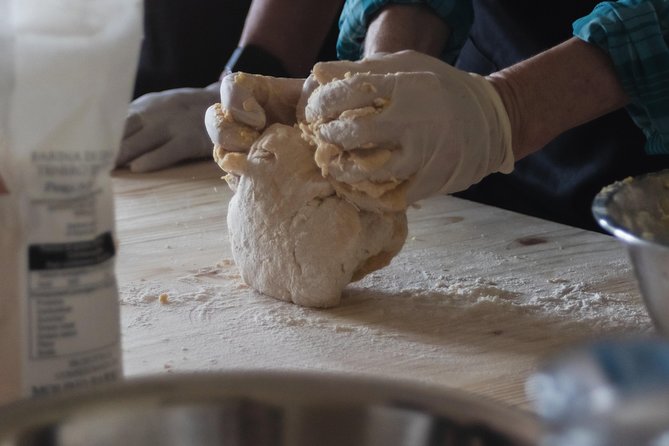
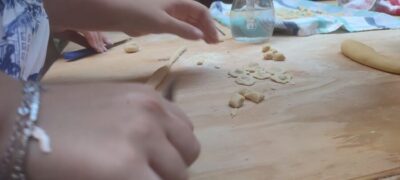
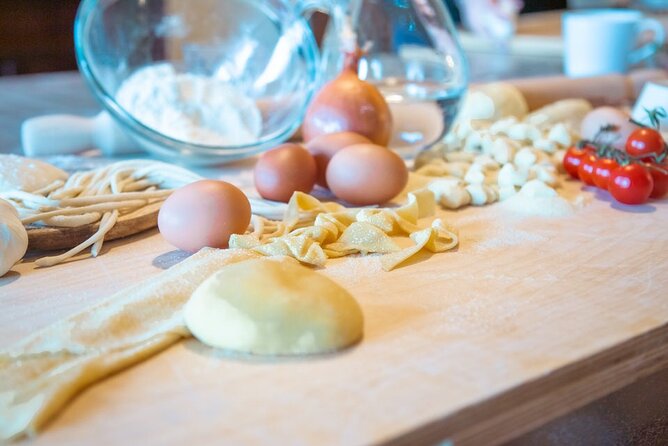
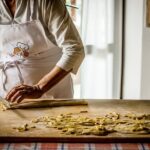
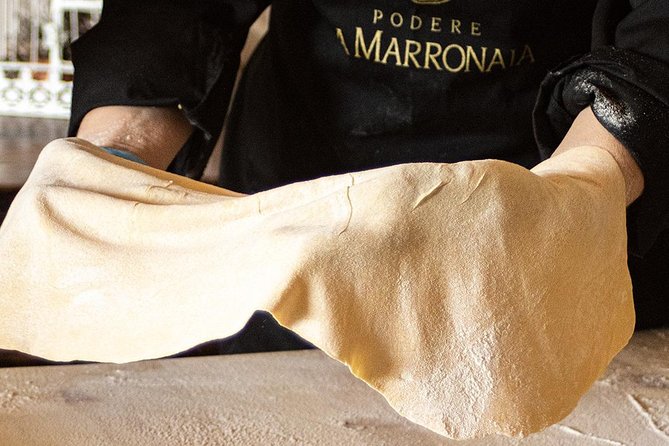
After the grain comes the real work: kneading, rolling, and shaping traditional Tuscan pasta. The class is hands-on and aimed at all skill levels, which you’ll feel in how the steps are taught. You’re not thrown into the deep end.
In one session, the chef Leonardo is specifically mentioned as patient with novices. That matches what you want in a cooking class. Pasta has a few unforgiving moments—dough that’s too dry, rolling that’s uneven—but patience makes it doable. You get time to adjust instead of rushing to fix mistakes.
Here’s what you can expect in practice:
- Kneading that teaches you the feel of dough, not just the ingredients list
- Rolling that helps you understand thickness—because pasta is all about proportion
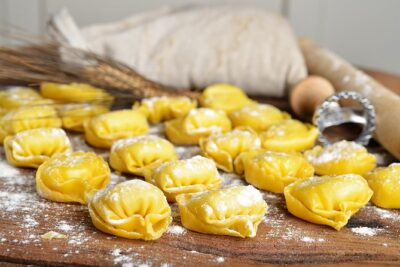
- Shaping that turns dough into different varieties, so you see how form affects serving and sauce
Even if you’ve made pasta before at home, this class is still valuable because it keeps the focus on technique. Many classes are “watch, then cook one thing.” This one takes you through a full cycle. You’ll leave with more than a recipe—you’ll leave with a mental checklist of what to look for when dough behaves differently.
One thing to keep in mind: shaping takes time. With only about 3 hours total, the pace is guided and efficient, but you’ll still feel the clock while you roll. If you like slow, leisurely cooking, you might wish you had more hours. If you like getting confident quickly, the timing works well.
Sauces, bruschetta-style bites, and building a real Tuscan plate
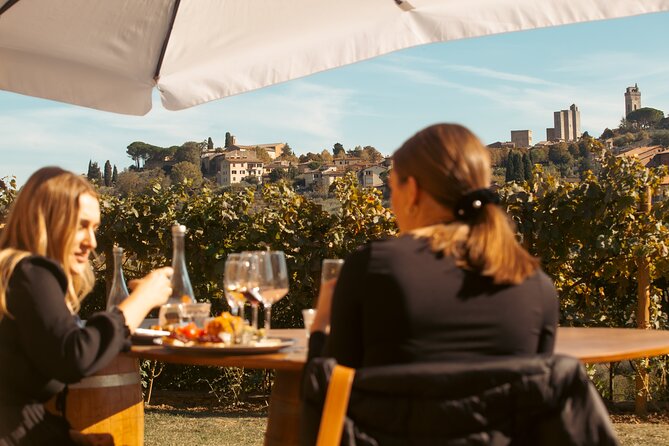
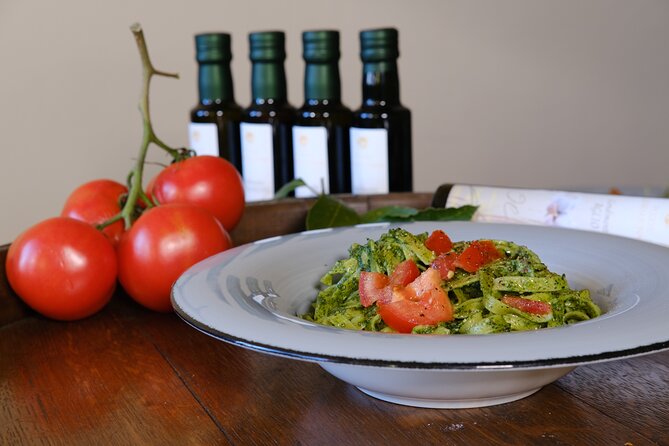
After your pasta is shaped and cooked, the day shifts toward assembling the meal. You’ll prepare authentic sauces using fresh, local ingredients to match what you made.
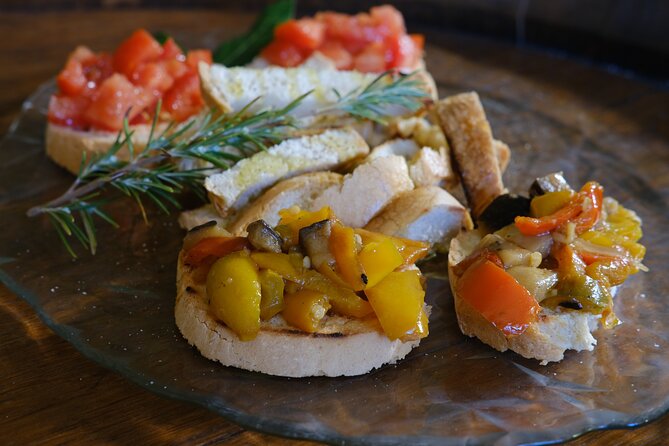
The class also includes more than pasta. Reviews mention that you’ll learn to cook pasta and bruschetta. That’s important because bruschetta-like bites change the rhythm of the meal. Instead of only focusing on one dish, you get that Tuscan spread feeling—bread, toppings, and flavor hits that keep the table lively while the pasta is doing its job.
When it comes to sauce, this is where the Tuscan logic clicks. Pasta isn’t just dough and water. The sauce is part of the training. You’ll learn how local ingredients work together and how to think about pairing.
For you, that means two takeaways:
- You’ll better understand why certain sauces cling and others don’t
- You’ll know how to build flavor without relying on complicated steps
The cooking portion is the heart of the experience, but it’s also the most personal. When you taste later, you’ll remember the exact moment you made the choice—rolling thickness, sauce consistency, timing in the kitchen.
Wine, olive oil, and balsamic tasting with your meal
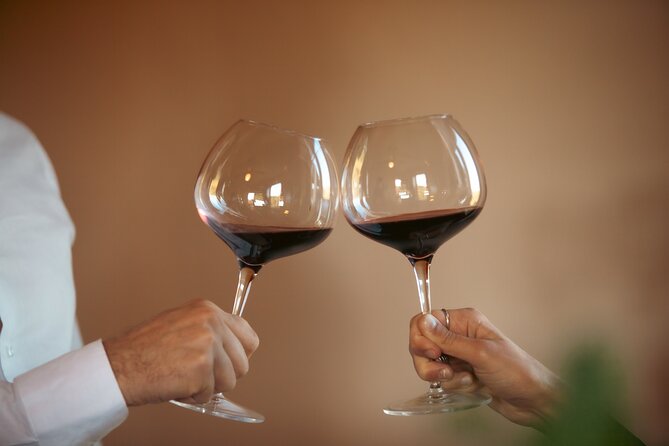
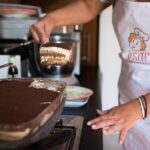
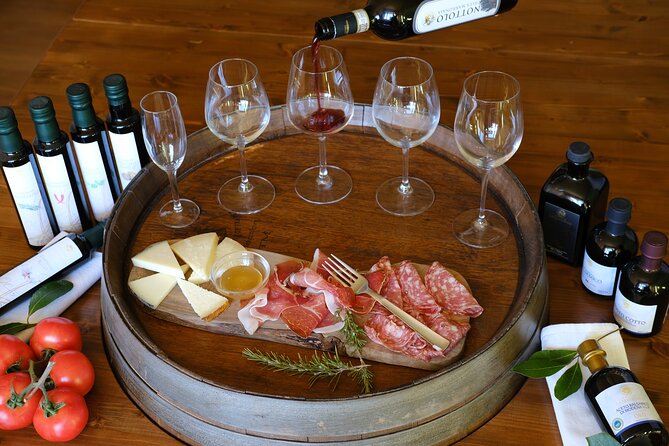
This class doesn’t treat tasting like an afterthought. After cooking, you relax and enjoy your handmade dishes paired with a curated tasting from the estate: organic and biodynamic wines, extra-virgin olive oils, and balsamic vinegar.
That pairing is the secret sauce—no pun intended. Olive oil and balsamic are more than “seasoning.” They’re flavor systems. When you taste them as part of a meal you made, you stop thinking of them as bottles on a shelf and start tasting them as ingredients with roles.
A few smart things to do during the tasting:
- Taste the olive oil and notice texture and finish before it meets anything else
- Pay attention to how balsamic changes bread flavors and how it supports other notes
- Sip wine slowly. It’s easy to rush once you’re hungry, but the point is comparison
Also, the organic and biodynamic note is a nice touch because it gives the tasting context. You’re not only drinking. You’re learning how the estate thinks about production.
This whole meal setup is why the class feels like dinner rather than a workshop. You’re not doing a task and then leaving. You’re cooking your way into an actual table experience.
The view over San Gimignano: the part you’ll remember later
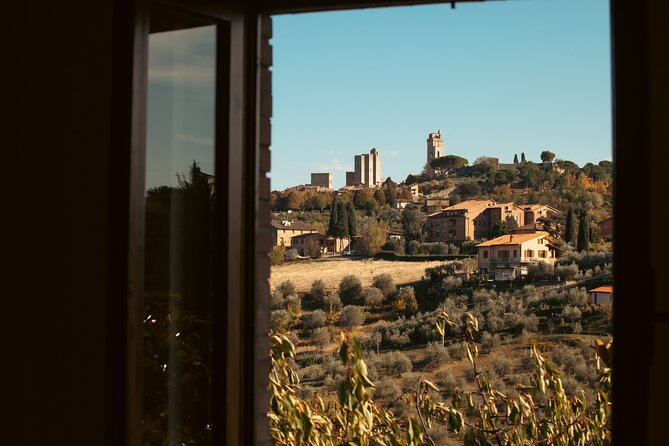
One of the strongest elements in the reviews is the scenery: exquisite Tuscan views with San Gimignano in the valley. Even if you’ve seen photos of town towers, it’s different when you’re sitting in a countryside setting with vineyards and olive groves around you.
This matters more than it sounds. Food classes can feel like chores. Here, the setting keeps you calm. It also makes the tasting feel like a reward, not a transition.
And because the estate is close to the historic town center, you can pair this with a walk through San Gimignano afterward without losing the whole evening to logistics.
Price and value: what you’re really paying for
At $378.16 per person for about 3 hours, this is not a budget class. The value comes from how complete the experience is.
Here’s what’s included that justifies the higher price point:
- You mill three kinds of organic grains yourself using a table mill
- You make traditional Tuscan pasta from scratch, with guidance throughout
- You prepare sauces and additional items for a full meal
- You eat what you cooked
- You get a tasting of estate organic and biodynamic wines, extra-virgin olive oil, and balsamic vinegar
- You do it in a small group (max 6), which increases coaching time
If you’re thinking about booking, ask yourself this: do you want a hands-on meal with ingredient connection, or do you mainly want a photo and a quick lesson? If it’s the second one, you’ll feel the price. If it’s the first, it starts to make sense because you’re getting multiple parts—skills plus dinner plus tasting—in one sitting.
Also, booked an average of 23 days in advance, it suggests this is a popular slot. If you know you want it, don’t wait until the last minute to decide.
Logistics that actually affect your day
This experience runs about 3 hours. That’s long enough for milling, dough work, cooking, and eating, but short enough that you won’t feel stuck all day.
You start at Via Martiri di Citerna, 2, then end back at the meeting point. That round-trip simplicity is helpful in San Gimignano, where you can burn time just figuring out routes.
A mobile ticket keeps things easy. Confirmation is received within 48 hours of booking, subject to availability, so you should book soon enough to plan around dinner reservations.
One more note: it’s near public transportation. That helps if you’re arriving by train or bus and want to avoid a complicated taxi plan.
Who should book this cooking class (and who might skip it)
This is ideal for you if:
- You want a hands-on pasta lesson, not a demo
- You care about ingredients and like seeing where they come from (grain to flour)
- You enjoy wine and olive oil tastings with your meal
- You like small groups and direct coaching
- You’re visiting San Gimignano and want countryside views without leaving the area
It might not be the best fit if:
- You’re on a tight budget
- You only want a short, casual taste of Italian cooking
- You prefer very long meals with lots of free time to wander around the kitchen area
If you’re traveling as a group, the max of 6 people can help with quality. For larger groups, you’ll want to coordinate schedules early, since the class size is limited.
Should you book Golden Grains & Gourmet Pasta?
Book it if you want a real Tuscan food experience that goes beyond pasta shapes. The grain milling step, the guided knead-roll-shape process, and the estate tasting afterward make it feel like dinner with lessons attached. The small group size and the family-run vibe also matter; you get attention, and you’re not rushed out once the food is plated.
Skip it if you’re mainly chasing a cheap activity or you don’t want to commit to the full 3-hour cooking rhythm. At $378.16 per person, you’re paying for ingredients, technique, and a complete meal.
If your ideal day includes making something from scratch, eating it immediately, and ending with wine and olive oil tasting in front of San Gimignano views, this is a strong choice.
FAQ
How long is the Golden Grains & Gourmet Pasta cooking class?
It lasts about 3 hours.
Where does the experience start and where does it end?
It starts at Via Martiri di Citerna, 2, 53037 San Gimignano SI, Italy, and ends back at the same meeting point.
What’s included in the class?
You’ll learn to make traditional Tuscan pasta from scratch, including milling organic grains, plus you’ll prepare sauces and enjoy what you cook.
Is there wine and olive oil tasting?
Yes. After cooking, you’ll taste the estate’s organic wines and extra-virgin olive oils, along with balsamic vinegar.
Is the experience suitable for beginners?
Most people can participate, and the class is designed to be hands-on and approachable for all skill levels.
How big is the group?
The maximum group size is 6 travelers.
Do I get a mobile ticket?
Yes, the experience offers a mobile ticket.
What is the cancellation policy?
You can cancel for a full refund up to 24 hours before the experience’s start time. Confirmation of cancellation timing is based on local time at the experience.