REVIEW · LECCE
Lecce: Pasta Making Class in 1400s-Era Courtyard with Wine
Book on GetYourGuide →Operated by LecceGo · Bookable on GetYourGuide
Worry less about dinner plans and more about your dough. This Lecce class turns a museum courtyard into a working kitchen where you hand-make orecchiette and sagne and then eat what you made with wine.
I especially like the way this experience teaches technique, not just a finished dish. You’ll work with a local cook who guides you through mixing dough and using the tools of the trade, and the museum setting (courtyard dating to the 1400s) keeps the whole evening feeling special.
The main consideration: you’ll be in a group format and shaping fresh pasta takes focus. If you want a totally quiet, low-effort activity, you might find the hands-on pace a bit intense.
In This Review
- Key things to know before you roll dough
- Lecce’s 1400s courtyard pasta class: the setting does half the job
- The 2.5-hour flow: what you’ll actually do from start to finish
- Your first lesson: water, flour, and getting the dough right
- Orecchiette in practice: shaping the sauce-catchers
- Sagne: the Puglia-only pasta shape you’ll want to repeat
- The food part: you eat your pasta with a glass of wine
- Where to start in Lecce: via Ascanio Grandi at the Faggiano museum
- Price and value: does $68 make sense for 2.5 hours?
- Teaching style, language, and the Nonna energy
- Who should book this Lecce pasta class
- Should you book LecceGo’s pasta class?
- FAQ
- What is the price of the Lecce pasta-making class?
- How long is the class?
- Where do I meet?
- What pasta will I make?
- Does the class include wine?
- What languages are available?
- What should I bring?
- Does the activity run in bad weather?
- Is it wheelchair accessible?
Key things to know before you roll dough
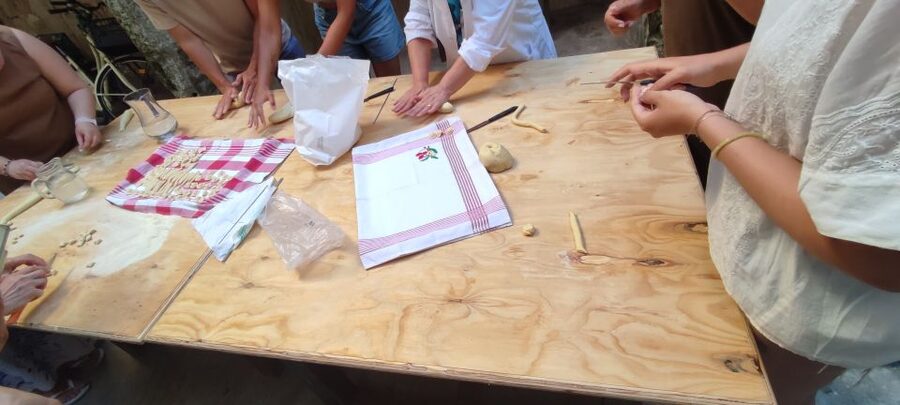
- A 1400s-style courtyard inside the Faggiano museum complex sets a true local mood, not a generic studio vibe.
- Hands-on instruction means you do the mixing and shaping, not just watch.
- Two Apulian pasta types: orecchiette and sagne gives you more than one skill set.
- You eat your pasta after class, with a glass of wine as part of the meal.
- Multilingual teaching (Italian, English, French) helps you follow the process clearly.
- Rain-or-shine session keeps your planning stress lower.
Lecce’s 1400s courtyard pasta class: the setting does half the job
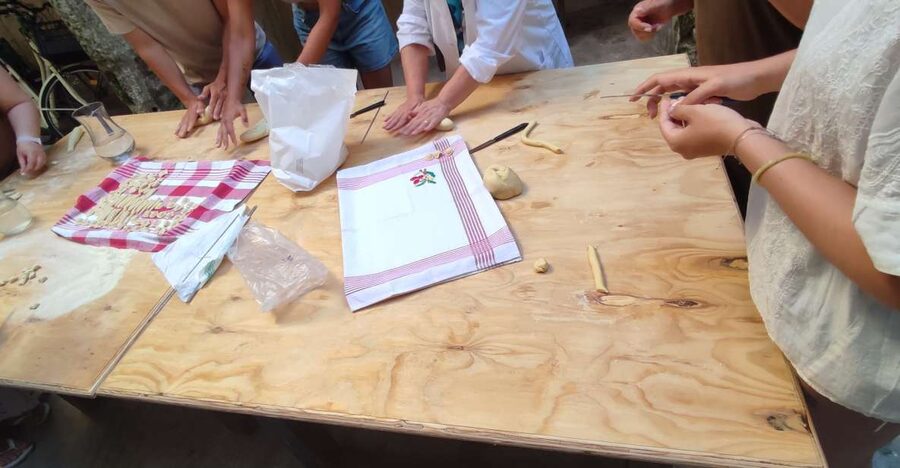
Lecce is known for drama in stone, and this experience leans into that. You start inside the museum area and move into a courtyard style kitchen that dates back to the 1400s. It’s the kind of place where you can actually feel why regional food traditions survive: the room was built for community meals long before “food tours” were a thing.
What makes it work for you is the balance. The setting is atmospheric, but the focus stays practical. You’ll learn how Apulia shapes its pasta—especially orecchiette, the iconic “little ear” form that’s meant to hold sauce—then tackle sagne, another classic Pugliese shape that’s strongly identified with the region.
And yes, the evening has a social pulse. You’re not just doing an activity; you’re joining a table culture moment where conversation and laughter show up right alongside flour on your hands.
The 2.5-hour flow: what you’ll actually do from start to finish
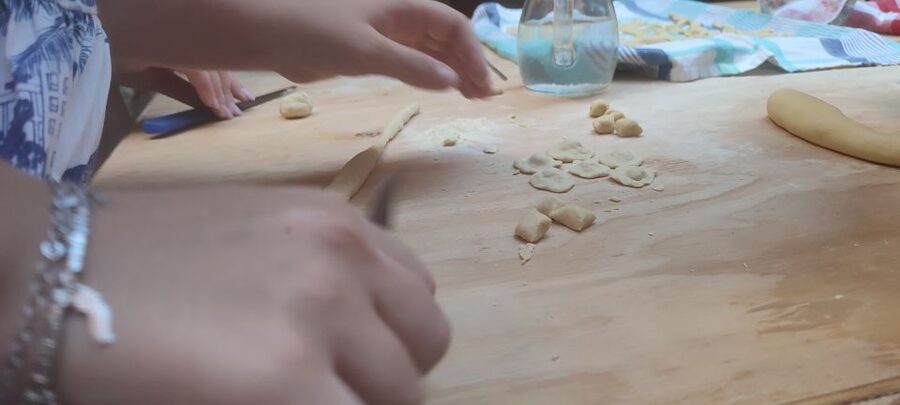
This is a compact experience—2.5 hours, designed so you can go home with two things: a full stomach and a real sense of how pasta dough behaves.
Here’s the typical rhythm:
- You meet at the museum location in central Lecce and get oriented.
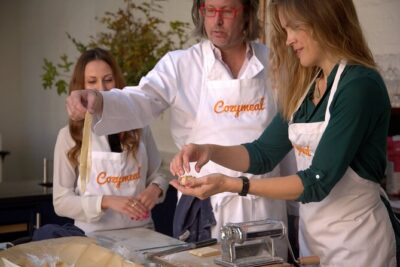
- The cook and instructor explain the process and tools.
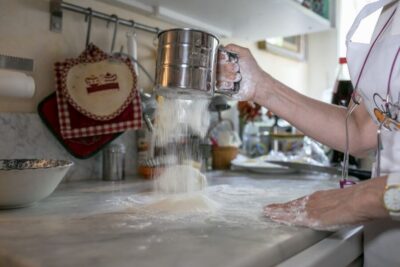
- You mix dough (water and flour) and start working it by hand.
- You shape the pasta types—orecchiette and sagne—using the traditional method you’re taught.
- As the pasta finishes, you shift from making to eating.
- You sit down for the pasta you produced and enjoy a glass of wine.
Why that flow matters: fresh pasta has a short window. The pacing is built around that reality, so you’re not waiting around for hours while everyone else finishes. You’re learning while you work.
Your first lesson: water, flour, and getting the dough right
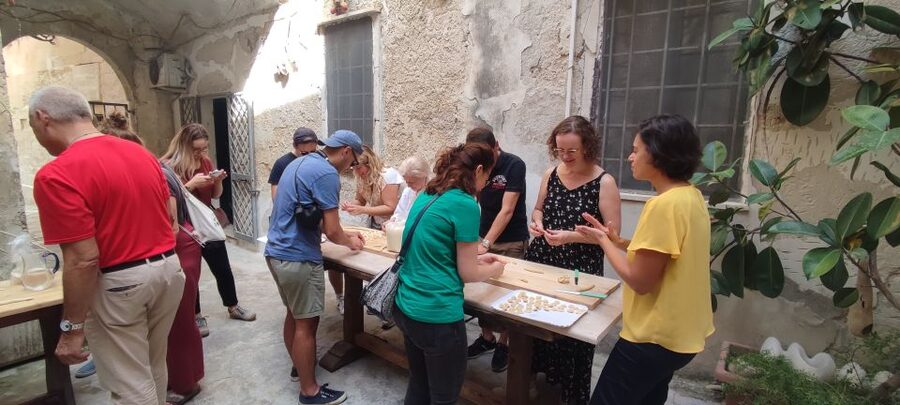
The best pasta classes don’t start with the “cool part.” They start with dough control. Here, you get a clear walkthrough of the basics: how to combine water and flour, what the dough should feel like as you knead, and how to use the tools properly.
This is where you’ll notice whether instruction is hands-on—or just theoretical. In this class, the guidance focuses on what you do with your hands. Even if you’ve never rolled dough before, the process is taught step-by-step so you can correct your texture as you go.
Also, the instructors help you manage the part that usually trips people up: dough hydration. If it’s too dry, it cracks. If it’s too wet, it sticks and won’t hold shape. The coaching you get is meant to keep your results usable, not frustrating.
Orecchiette in practice: shaping the sauce-catchers
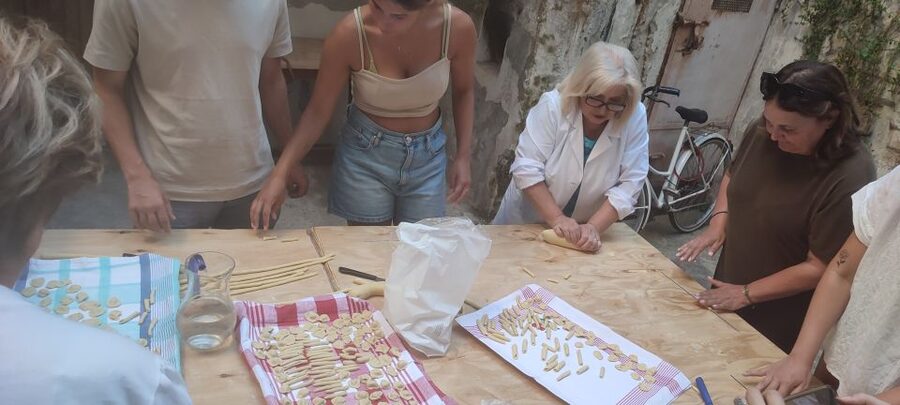
Orecchiette isn’t hard because it’s complicated—it’s hard because it’s precise. The shape has to be consistent enough to cook evenly, and it has to be textured enough to catch sauce.
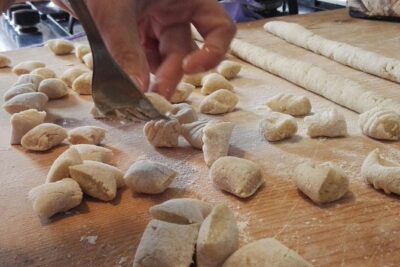
You’ll learn how to shape it the traditional way, using the technique your instructors show you in real time. You’ll likely spend most of your working minutes on getting the motion and pressure right. That’s also the part that makes the end result satisfying: when you finally see your little ears on the table, you realize you didn’t just make pasta—you made a regional signature.
One of the nice advantages of learning orecchiette in Lecce is context. This isn’t being taught as a generic “Italian pasta.” You’re learning a South Italian habit—how Apulian pasta is meant to work with sauces and how shape affects the bite.
Sagne: the Puglia-only pasta shape you’ll want to repeat
Alongside orecchiette, you’ll make sagne, described as a pasta type made exclusively in Puglia and exported far beyond the region because people love it.
Sagne adds variety to what you learn. If orecchiette is about shaping and texture, sagne is about mastering another method and understanding how different pasta forms change the eating experience. You’ll come away realizing that “pasta” isn’t one skill—it’s a toolkit of shapes, each with a job.
Even if your orecchiette aren’t perfect on the first try (they usually aren’t), the sagne practice helps you see the broader lesson: consistency comes from doing the motions the same way every time.
The food part: you eat your pasta with a glass of wine
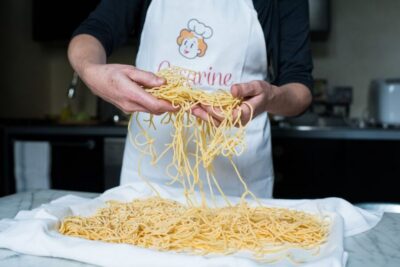
You don’t just make the pasta and rush away. After the cooking work, you eat what you produced. You’ll have a glass of wine with your meal, and the overall vibe tends to stay warm and social while the group shares the table.
This part matters because it turns a skill lesson into a memory. You taste your own orecchiette—fresh, shaped by you, and paired with the experience of being in a real Lecce setting. The wine also keeps the evening from feeling like school. You can focus on the conversation without losing the thread of what you learned.
In practical terms, plan to enjoy the meal fully. Your hands will work before you sit. That’s why the food feels earned.
Where to start in Lecce: via Ascanio Grandi at the Faggiano museum
Your meeting point is clearly set: via Ascanio Grandi n 58, at the Faggiano Archaeological Museum. This is central Lecce, so you’re not stuck crossing the city or arranging complicated logistics just to begin.
Tip: build a little buffer into your arrival time. You’ll want to check in, find the right space, and settle before dough work starts. Fresh pasta is time-sensitive, and the evening runs on a steady pace.
If you’re pairing this with an evening stroll, schedule it earlier rather than later. You’ll want enough energy for the walk back after you’ve eaten.
Price and value: does $68 make sense for 2.5 hours?
At $68 per person for 2.5 hours, the question isn’t just cost—it’s what you receive.
For your money, you get:
- A professional cook and instruction in the process
- A unique museum courtyard setting in central Lecce
- Cooking equipment included
- The pasta you make, served as part of the meal
- Wine with the experience (at least a glass)
What’s not included is transport, so you’ll need to get yourself to via Ascanio Grandi on your own.
Is it worth it? I think so if you value active learning and want a dinner that’s not just a restaurant reservation. You’re paying for time with skilled instructors and a setting that gives the lesson weight. If you’re only interested in eating pasta, you might get a cheaper meal elsewhere. But if you want to leave with the how—not just the taste—this price can feel fair.
Teaching style, language, and the Nonna energy
A big part of why this class scores well is the teaching approach. Instruction is offered in Italian, English, and French, which helps when you’re trying to understand technique without guesswork.
You may hear instructors and guides with names like Luciana and cooks sometimes referred to as Nonna Teresa/Therese. The key point for you isn’t the name on the roster; it’s that the teaching emphasizes precision and quality control. Some instructors keep things moving firmly—more strong guidance than casual chatting during the dough stage.
That “hands-on with standards” style is exactly what you want in pasta shaping. Pasta dough doesn’t care about good intentions. It responds to touch, timing, and correct texture—so the group benefits when instruction focuses on that.
Who should book this Lecce pasta class
This is a great fit if:
- You want a hands-on cooking skill you can try again at home
- You like learning regional food traditions rather than collecting photos
- You enjoy a social meal as part of the activity
- You prefer small details explained clearly, not vague demonstrations
It may be less ideal if:
- You’re short on time and need a “drop-in” activity with no focus required
- You dislike working with your hands and don’t want dough cleanup
- You want an experience that’s mostly observation rather than participation
Also, the experience is wheelchair accessible, which is worth noting if mobility is part of your planning.
Should you book LecceGo’s pasta class?
Book it if you’re in Lecce for more than one day and you want an evening with real local flavor: orecchiette and sagne, a courtyard kitchen vibe, and the best kind of souvenir—something you learned how to make. At $68 for 2.5 hours with professional instruction, equipment, your meal, and wine, the value holds up for anyone who wants an authentic food moment rather than another standard dinner.
Skip it only if your ideal trip is mostly passive. This is work in the fun direction. If you’re ready to flour up, you’ll come away with a skill and a story.
FAQ
What is the price of the Lecce pasta-making class?
It costs $68 per person.
How long is the class?
The duration is 2.5 hours.
Where do I meet?
Meet at via Ascanio Grandi n 58, at the Faggiano Archaeological Museum.
What pasta will I make?
You’ll make Orecchiette and Sagne.
Does the class include wine?
Yes. After the course, you eat your pasta and enjoy a glass of wine.
What languages are available?
The instructor offers Italian, English, and French.
What should I bring?
Bring a passport or ID card.
Does the activity run in bad weather?
Yes. The tour takes place rain or shine.
Is it wheelchair accessible?
Yes, it is wheelchair accessible.