REVIEW · ITALY
Valnerina/Pasta cooking class in a 12th century location
Book on GetYourGuide →Operated by Ludomar Travel · Bookable on GetYourGuide
A cooking class in a 12th-century setting changes the whole mood. I love the hands-on menu (homemade pasta plus a main and dessert), and I like that it’s staged in the Abbazia of San Pietro in Valle area, so the experience feels calm and real rather than touristy. One thing to keep in mind: it’s only 3 hours, so it’s best for learning the basics and getting recipes you can repeat later, not for total mastery.
What really helps is the class format itself. You prepare the food while drinks are provided, and the team keeps things welcoming in the real way you want on vacation. Plus, it’s offered in English, German, and Italian, which makes it easier to follow instruction even if you’re not fluent. There’s also a “you leave with proof” touch: you test your dishes at the end and receive a certificate, a recipe booklet, and a small gadget.
In This Review
- Key highlights at a glance
- A 12th-century abbey setting in Valnerina
- The practical takeaway
- What you cook in 3 hours: pasta, a main, and dessert
- What you get at the end (and why it’s worth caring about)
- Hands-on learning, with drinks and real instruction
- A small planning tip
- Arriving at Alloro Ristorante and the Relais photo stop
- Who runs the show?
- Price and value: is $82 per person fair in Umbria?
- My value verdict
- Who this pasta class suits best (and who it won’t)
- The best way to get the most out of your 3 hours
- Potential drawbacks and how to plan around them
- Should you book this class at Abbazia San Pietro in Valle?
- FAQ
- What is the duration of the cooking class?
- Where does the class start?
- What will I cook during the class?
- Are drinks included?
- What do I receive at the end?
- What languages are offered for the instructor?
- Is it a private group experience?
- Is the location wheelchair accessible?
- How much does it cost?
- Can I cancel or pay later?
Key highlights at a glance
- 12th-century location in Valnerina: the class happens in the Alloro Restaurant inside the Abbazia of San Pietro in Valle.
- Handmade pasta plus full meal: pasta, a main course, and a dessert in one session.
- Learn-by-doing teaching style: practical steps you can replicate at home.
- Take-home keepsakes: certificate, small recipe booklet, and a small gadget.
- Private group feel: you’re not packed into a huge crowd, and the host works with your group.
- Multi-language support: instruction is available in English, German, and Italian.
A 12th-century abbey setting in Valnerina
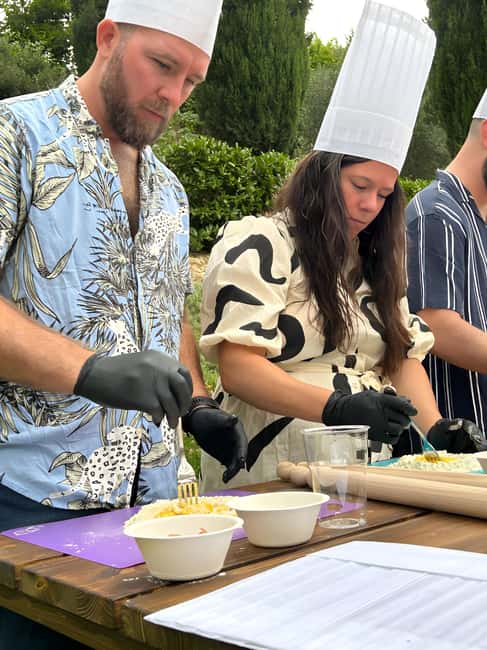
The meeting point is Alloro Ristorante, part of the Abbazia of San Pietro in Valle (in the Valnerina area of Umbria). This matters more than it sounds. When a class takes place in a historic site that’s actually used for hosting, you get that sense of rhythm: fewer distractions, less rushing, and more “you’re here because this place has always been about hospitality.”
You’ll also have a short photo stop at Relais Abbazia San Pietro In Valle—just 10 minutes, but enough time to orient yourself and capture the feel of the setting before you settle into the cooking portion.
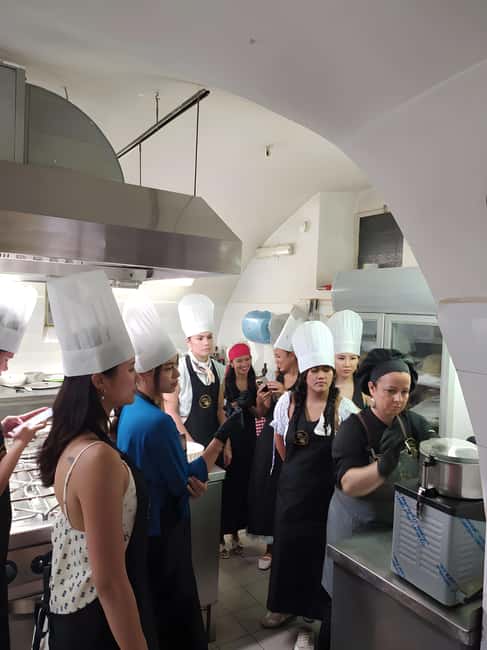
The class is described as set in a cozy, original restaurant of the XII century. That word cozy is doing real work here. In a modern cooking school, you often spend time figuring out where to stand and where everything is. In an older space like this, the team typically has the flow already worked out: where you prep, where ingredients move, and how the room stays comfortable while everyone cooks.
The practical takeaway
Plan to arrive with a little buffer. Historic abbeys can have winding approaches and you want a calm start before flour and timers enter the chat.
What you cook in 3 hours: pasta, a main, and dessert
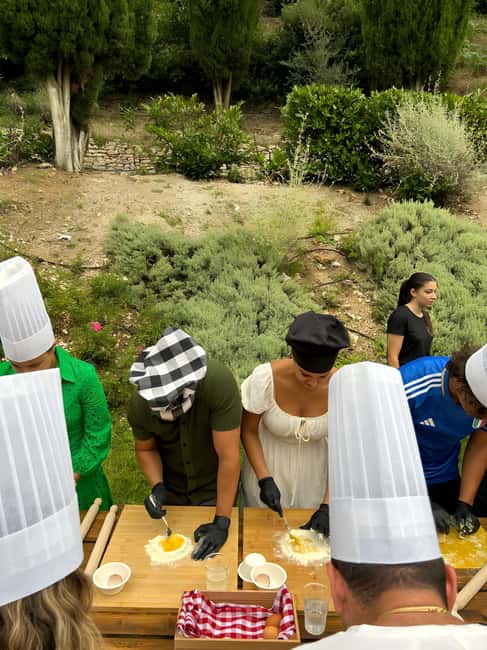
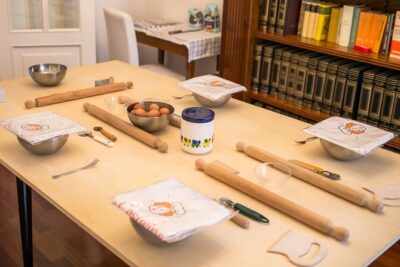
This is not a “watch and taste” session. You prepare a full mini-menu:
- Handmade pasta
- A main course
- A dessert
That sequence is a smart pacing choice. Pasta is hands-on and timing-sensitive, so it teaches technique fast. Then you shift to the main course so you build confidence with the next layer of the meal. Finally, the dessert closes the loop with something you can recreate at home without it feeling like an entirely new project.
Even better, the class is built around authenticity. The cooking philosophy is focused on precious recipes passed down through generations. In plain terms, that means you’re not just learning a trendy dish you’ll forget next week. You’re learning a method and a flavor logic you can repeat.
What you get at the end (and why it’s worth caring about)
At the end of the class, participants test what they made. That sounds simple, but it’s valuable. You’re not leaving with “maybe it was right.” You get feedback from the process and the team, and you can taste your own work while it’s still fresh.
Then you receive:
- a certificate of participation
- a small booklet with recipes
- a small gadget as a reminder
If you’ve ever taken cooking classes and left with nothing but photos, this is the opposite. The booklet gives you a path back to the dishes later. The gadget is small, but the idea is to keep the day from dissolving into memory haze.
Hands-on learning, with drinks and real instruction
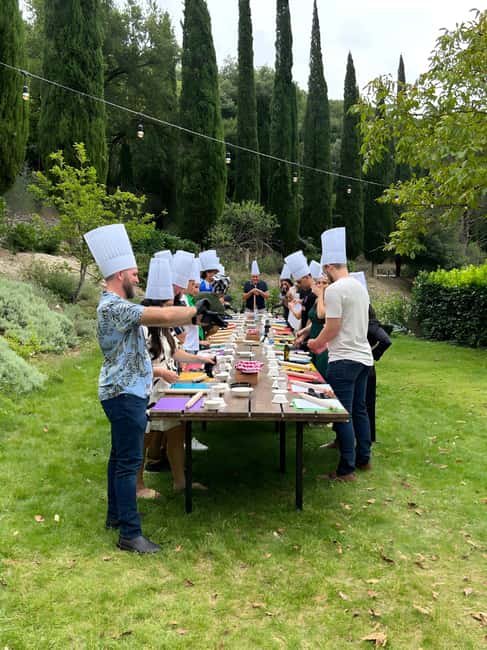
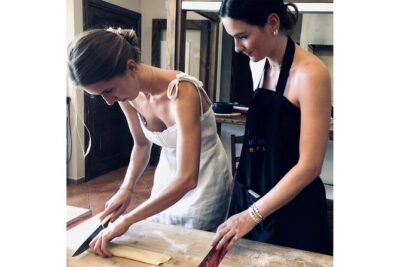
The class is designed around doing, not listening. You’ll be working through pasta preparation plus the later dishes, guided by the instructor team. The big quality-of-life detail here is that drinks are included while you cook. That keeps the atmosphere relaxed, especially if you’re traveling and don’t want your “vacation experience” to feel like a strict workshop.
Instruction is offered in English, German, and Italian, so the group doesn’t have to stretch to find a common language. And since it’s a private group format, the teaching can stay more focused on your group’s pace rather than getting pulled along by dozens of people.
From the overall vibe described for this class, the team’s approach is warm and welcoming. That matters in a cooking environment because small mistakes happen: dough texture, dough thickness, timing. When the host is patient and friendly, you’re more likely to ask questions and get useful corrections quickly.
A small planning tip
Because you’ll be making multiple courses, start the day ready to eat. If you arrive starving, you’ll also feel rushed. If you arrive already full, you might not taste or judge your final results as well. Aim for a normal appetite and let the meal land where it should.
Arriving at Alloro Ristorante and the Relais photo stop
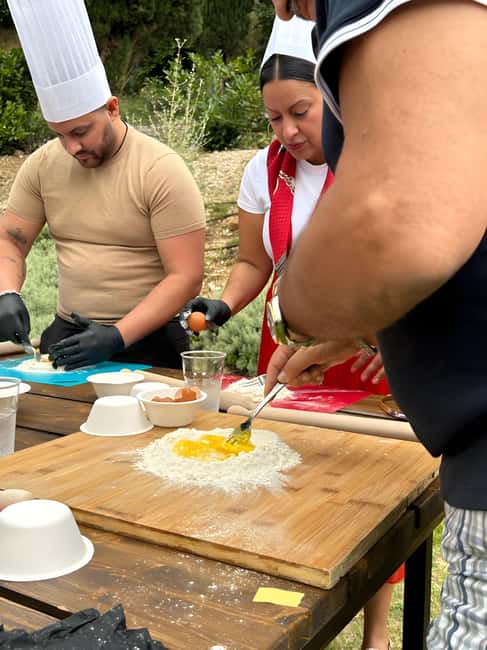
Your starting location is Alloro Ristorante in Abbazia, so you’re not spending time commuting across town. For many Umbria experiences, that’s a quiet win. You avoid the “get there, then hunt for the group, then fight parking” stress.
The flow includes:
- Starting at Alloro Ristorante in the Abbazia setting
- A Relais Abbazia San Pietro In Valle photo stop (10 minutes)
That photo stop is short on purpose. The primary goal is the cooking. The photo moment is there to help you remember the place and connect it to what you’re doing inside.
If you’re the kind of traveler who likes details, this pairing works well: you see the historic property for a moment, then you move into the restaurant where the day actually happens. In other words, you get both atmosphere and instruction, without turning the schedule into a parade.
Who runs the show?
The experience provider is Ludomar Travel. The instructor part is multi-language (English, German, Italian). The class itself is described as hosted at the Abbazia’s in-house restaurant, the Alloro Restaurant. That “in-house” detail is often where the value hides: you’re not meeting a vendor that rents a room for the day. You’re participating in something integrated into the estate’s hospitality.
Price and value: is $82 per person fair in Umbria?
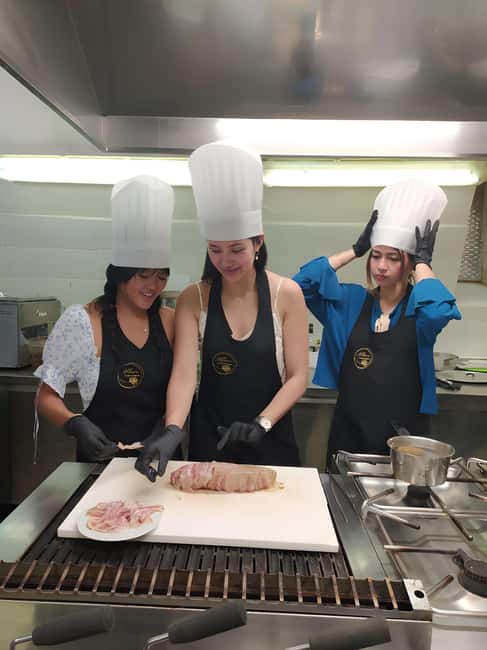
At $82 per person for a 3-hour hands-on class, the key question is what’s included beyond the teaching.
Here’s what you’re paying for, bundled together:
- Handmade pasta preparation
- Main course preparation
- Dessert preparation
- Drinks during the experience
- Tasting/testing your dishes at the end
- Certificate plus a recipe booklet
- A small gadget take-home
- Multi-language instruction
- A private group format
- A historic XII-century setting (not just a generic venue)
When cooking experiences cost less, it’s often because they cut corners: fewer courses, no real meal build, limited instruction, or no take-home notes. Here, you get a complete meal structure plus the documentation to reproduce it. And you’re spending those hours inside a real abbey complex tied to the local setting, which tends to cost more in both logistics and ambiance.
Private group format can also affect value. Even without exact group size, “private” generally means the class isn’t diluted into chaos. It can mean more attention per person, and that matters when you’re learning dough and timing.
My value verdict
For a vacation day in Umbria—where experiences add up fast—this price feels like it’s anchored to the “whole package,” not just the cooking. If you want the kind of day where you eat what you made and leave with recipes, it’s a strong fit.
Who this pasta class suits best (and who it won’t)
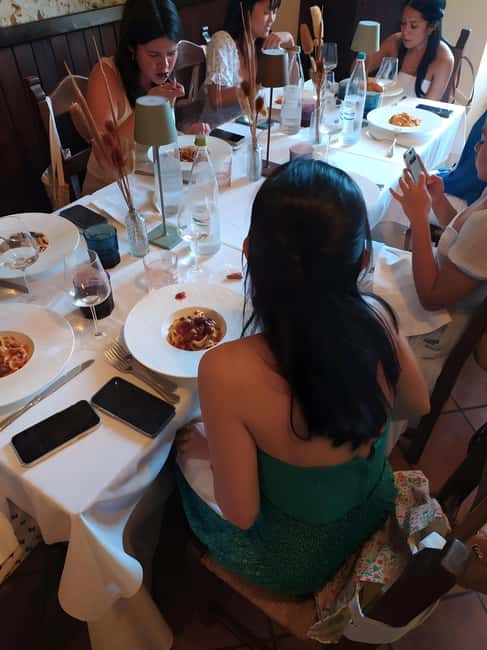
This experience fits travelers who want an authentic-feeling day without needing to speak Italian fluently.
It’s a great match if you:
- enjoy hands-on activities more than passive tours
- want a complete meal (pasta, main, dessert) in one go
- prefer learning recipes you can repeat later, not just collecting photos
- like the idea of cooking in a historic setting rather than a modern studio
It also looks particularly family-friendly in practice. One of the standout points from past participation mentions extra care for a younger guest (a 7-year-old). That suggests the hosts know how to adapt the day so it works across age ranges—at least with the kind of structure and patience a classroom-style cooking session requires.
Where it may not fit as well:
- If you want a long, slow “chef’s journey” lasting half a day, 3 hours can feel brief.
- If you’re looking for a deep, technical pasta school that covers lots of variations, this is more of a guided menu build with practical steps.
The best way to get the most out of your 3 hours
You can’t control everything, but you can show up in the right mindset. Here’s how to maximize the day.
First: treat it like a repeatable workshop. The most valuable part isn’t just the meal. It’s the method. So pay attention to texture, timing, and sequence—especially during pasta prep. Even if the exact steps aren’t identical to your home kitchen, the logic transfers.
Second: ask questions while it’s still practical. When something feels off—dough too sticky, too dry, sauce timing—ask right away. The class is designed for you to make corrections during the flow, not after.
Third: plan for tasting and judging your own results. Since the class includes a tasting/testing moment at the end, you’ll get better learning from feedback and self-assessment than from rushing to the next dish.
Lastly: plan your day around appetite. You’ll be making multiple courses, and drinks are part of the atmosphere. Keep your schedule lighter afterward so you can digest the day, not just run to the next activity.
Potential drawbacks and how to plan around them
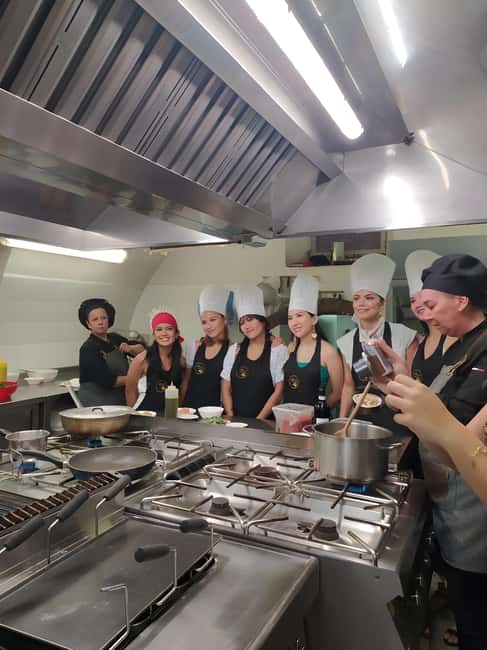
No experience is perfect, so here are the realistic considerations based on the experience details.
Time is tight. Three hours means you’ll cover a full menu but not every possible pasta variation or technique. Go in wanting a strong foundation and a recipe booklet you can use later.
Language flexibility helps, but you still need clarity. Instruction is available in English, German, and Italian. If you’re choosing among languages, pick the one you’re most comfortable understanding at speed.
Historic setting means you should expect a different feel. A XII-century restaurant is unlikely to feel like a modern classroom. That can be great. Just don’t expect everything to operate like a sleek culinary lab.
Should you book this class at Abbazia San Pietro in Valle?
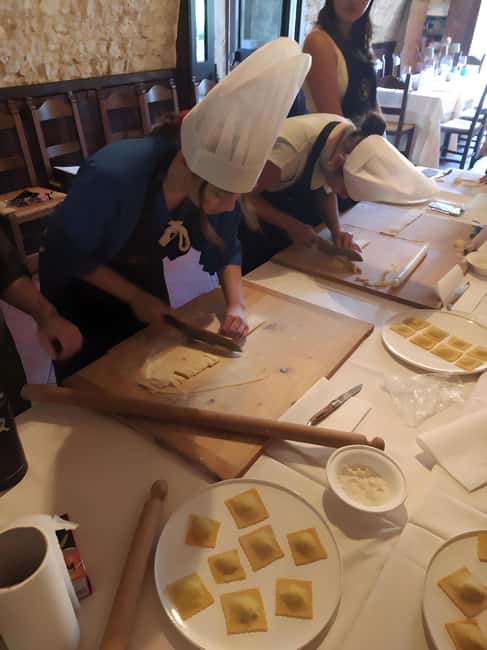
Book it if you want a genuinely local-feeling cooking day in Umbria where you make a full meal, not just one dish. The $82 price makes sense because you’re getting a full pasta-and-more experience, drinks, take-home recipes, and a certificate—inside a setting that feels like it belongs to the place, not just the calendar.
Pass if you want a longer, more advanced course or lots of deep technique beyond a guided menu. This is built for practical learning with a warm, welcoming vibe and a clear finish: you cook, you taste, you leave with something you can reproduce.
If that sounds like your kind of travel day, you’ll likely walk away thinking about the flavors long after the apron comes off.
FAQ
What is the duration of the cooking class?
The class lasts 3 hours.
Where does the class start?
You meet at Alloro Ristorante in Abbazia (Relais Abbazia San Pietro in Valle).
What will I cook during the class?
You’ll prepare handmade pasta, a main course, and a dessert.
Are drinks included?
Yes, the experience includes drinks while you cook.
What do I receive at the end?
You test/taste what you made and receive a certificate of participation, a small booklet with recipes, and a small gadget.
What languages are offered for the instructor?
Instruction is available in English, German, and Italian.
Is it a private group experience?
Yes, it’s described as a private group.
Is the location wheelchair accessible?
Yes, the activity is wheelchair accessible.
How much does it cost?
The price is $82 per person.
Can I cancel or pay later?
The experience offers free cancellation up to 24 hours in advance for a full refund, and it also offers a reserve now & pay later option.