REVIEW · TREVISO
Share your Pasta Love: Small group Pasta and Tiramisu class – Bassano del Grappa
Book on Viator →Bookable on Viator
Fresh pasta starts with your hands. This small-group Pasta and Tiramisu class in Bassano del Grappa is built around hands-on sfoglia and ends with from-scratch tiramisu in a real local home.
I love the practical, step-by-step approach to rolling fresh dough, not just watching from the sidelines. I also love that you learn both a savory pasta routine and the iconic dessert in one 3-hour session, with an Italian aperitivo warming things up first. One thing to consider: because it happens in a private home near Bassano del Grappa (not a big cooking school), you’ll want to double-check your directions and public-transport route ahead of time.
In This Review
- Key things to know before you go
- A home-run cooking class in Bassano del Grappa
- How the small-group size keeps the learning real
- Warm-up aperitivo and meeting your hosts
- Rolling sfoglia by hand: the skill that makes everything click
- Two pasta types in one session: ravioli-style filling plus fresh pasta
- Filled pasta (ravioli-style)
- Fresh pasta (another shape from your sheets)
- Tiramisu from scratch: the dessert that rewards patience
- What you actually do vs what you just taste
- Sanitation rules and home-kitchen comfort
- Price and value: what you’re paying for
- Logistics that matter: where to meet and how to plan
- Who should book this class (and who might skip it)
- Should you book Pasta Love in Bassano del Grappa?
- FAQ
- How long is the Pasta and Tiramisu class?
- How big is the group?
- What do I learn during the session?
- Is there food or drink before cooking?
- Where does the class meet?
- Can I cancel for free?
Key things to know before you go
- Max 12 people means more time with your host and less waiting around
- You roll sfoglia by hand instead of relying on machines
- You make two pasta types: one filled (ravioli-style) plus one fresh pasta
- You finish with tiramisu using a home-kitchen method you can repeat later
- An Italian aperitivo kicks off the class so you start tasting before cooking
- Cesarine home cooks: lessons happen in local houses, with family-style hospitality
A home-run cooking class in Bassano del Grappa
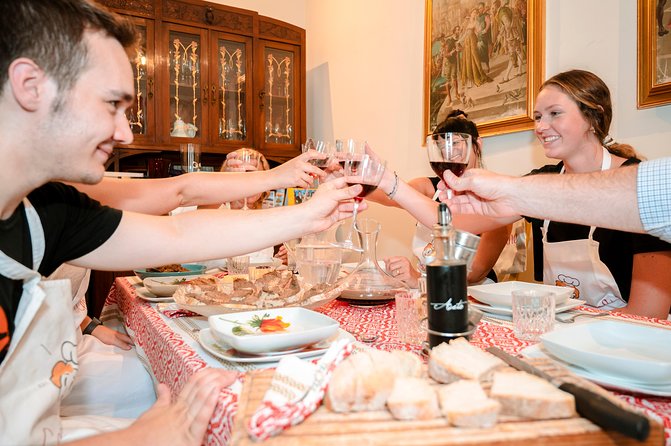
If you want Italy in a single afternoon, this is a smart pick. You’re not in a demo room. You’re in a local home, learning classic techniques that real families pass along.
The setting matters more than it sounds. Private homes tend to have a lived-in rhythm: the kitchen feels like it’s used every day, and your hosts can correct your technique in a human way. The class runs about 3 hours, so you get enough time to make progress without feeling like the evening will drag.
And yes, the theme is simple: pasta and tiramisu. But the real value is how it’s taught—by doing. You’ll learn key building steps from scratch, the kind you’d struggle to figure out alone from recipes.
You can also read our reviews of more tours and experiences in Treviso.
How the small-group size keeps the learning real
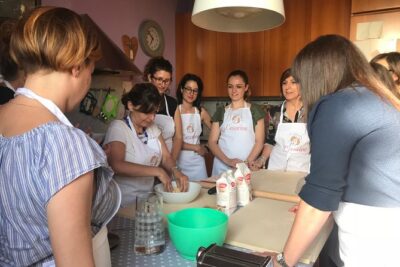
This class caps at 12 travelers, which is a big deal for dough work. Pasta making has a few tight moments—rolling thickness, sealing filled pasta, and keeping the right texture while you assemble. When the group is small, you can ask questions while your dough is still workable, not after it’s already dried out.
It also changes the vibe. You’re sharing the kitchen with a handful of people, not a crowd. That tends to make the whole session feel like you’ve been brought in, not like you’re attending a ticketed show.
For me, this is the biggest reason the experience feels worth the price: you’re paying for coaching time, not just ingredients and equipment access.
Warm-up aperitivo and meeting your hosts
You start with an Italian aperitivo. That isn’t just a nice extra. It sets the tone: you’re tasting and chatting before flour ever flies. In a class like this, the aperitivo helps you relax into the kitchen environment, and it gives you a natural moment to ask basic questions early.
Then you meet your hosts. Based on past classes connected with this Cesarine network, you may be welcomed by home cooks such as Gabriella and Arturo, with family members helping along in the background—one class even notes their daughters, Elizebeth and Barbara, as part of the warm reception.
That family feel is the point. The hosts aren’t just instructors. They’re opening their own home, teaching you their family way of cooking, and treating the group like friendly guests.
Rolling sfoglia by hand: the skill that makes everything click
The first real milestone is learning how to roll sfoglia—fresh pasta dough—by hand. This is the backbone lesson. Even if you’ve eaten fresh pasta in Italy, you might not realize how much the dough thickness and handling affect the final bite.
You’ll practice turning dough into thin sheets, which then become the working surface for pasta shaping. Expect the hosts to guide you on technique and consistency. Hand-rolling also forces you to pay attention to something recipes don’t always explain well: how the dough feels when it’s ready, when it resists, and how to correct it without turning it into a sticky mess.
Practical takeaway for you: if you can roll decent sfoglia in a home kitchen with guidance, you’ll understand what to aim for when you try pasta again later. That makes the class more than a one-off meal.
Two pasta types in one session: ravioli-style filling plus fresh pasta
After sfoglia, the class moves to making two iconic pasta types, specifically described as a filled pasta and a fresh pasta.
Filled pasta (ravioli-style)
A filled pasta is where technique really shows. In at least one class tied to this experience, people focused on ravioli. That means you’re working with dough sheets, adding filling, and then sealing pieces so they hold together during cooking.
The key value here is learning the full workflow: portioning, filling, sealing, and managing the dough so it doesn’t dry out or tear. Sealing is where beginners usually struggle, so having a host right there makes a difference.
Fresh pasta (another shape from your sheets)
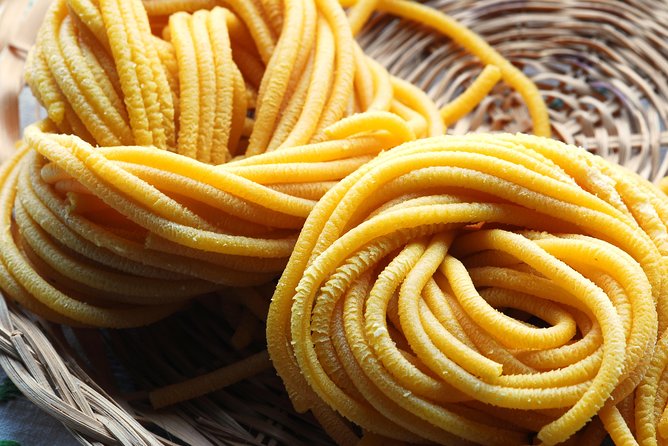
The second pasta is a simpler “fresh pasta” type, made from the sfoglia you rolled earlier. The listing emphasizes that it’s different from the filled pasta, but it doesn’t lock you into one specific famous shape name in the details you provided.
Still, you should expect the practical lesson to be clear: you’ll take those fresh sheets and turn them into another pasta format, learning how to handle and shape without overcomplicating it. This part is great for you if you want a technique you can repeat without needing a filling recipe every time.
Together, filled pasta plus fresh pasta gives you contrast. You see how the same dough behaves when the cooking method and handling change.
Tiramisu from scratch: the dessert that rewards patience
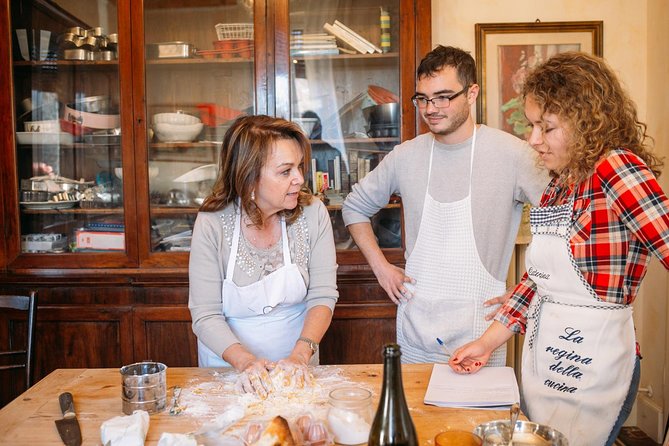
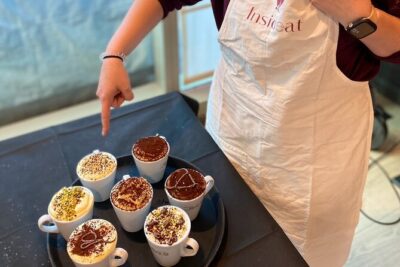
Then comes tiramisu, the final touchdown. The class doesn’t position it as a shortcut dessert. It’s taught as something you build from scratch, step by step, so you learn the flow of assembly.
Tiramisu is one of those desserts where timing matters. If the components aren’t treated correctly, you end up with something that’s either too stiff or too watery. In a home setting, your hosts can guide you on the texture and the order of work so it sets the way it should.
The bigger win for you is learning process, not just ingredients. Once you understand the rhythm—mixing, layering, and assembly—you’ll feel less stuck next time you make it back home.
And since you finish the savory and the sweet in the same evening, you get a complete taste of Italian home cooking culture. It’s not a dessert class that happens after a meal. It’s part of the cooking story.
What you actually do vs what you just taste
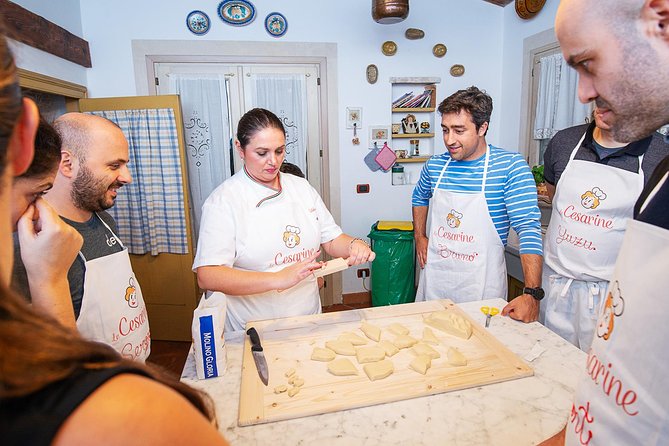
This experience is hands-on. You’re rolling dough and building dishes, not just eating while someone else cooks.
That also affects what you’ll remember. You’ll remember the thickness of the sheets, the feel of sealing, and the final tiramisu assembly steps. That’s the kind of memory that helps when you try these dishes later.
One bonus: because it’s hosted in a local home, the class tends to feel grounded. You’re cooking on equipment and in a space that resembles how people really live and feed themselves, not a polished studio kitchen designed only for visitors.
Sanitation rules and home-kitchen comfort
A practical note: the hosts are described as careful and attentive about sanitary rules, including maintaining 1 meter distance when possible. If distancing can’t be maintained, masks and gloves are mentioned. You’re also told that the homes provide essential sanitary equipment such as paper towels for washing hands and hand sanitizing gel.
This matters because cooking classes can get tight around counters and tools. Having clear expectations makes the session easier to enjoy without constant uncertainty.
Price and value: what you’re paying for
At $114.60 per person for about 3 hours, this is not the cheapest thing you can do in northern Italy. But it’s also not trying to be a low-cost “food tasting.”
For the price, you get:
- a small-group format (max 12), which increases coaching time
- learning core techniques: sfoglia by hand, plus two pasta types
- learning tiramisu from scratch
- an Italian aperitivo to start
- the Cesarine concept of real home cooking in local houses
If you compare it to a typical restaurant meal, you’re paying for instruction and process, not just food on a plate. If you compare it to private classes, you’re getting a crowd-free setup at a more reasonable group price.
So I’d call this strong value if you want skill, not just a dinner memory.
Logistics that matter: where to meet and how to plan
The class starts at 36061 Bassano del Grappa, Province of Vicenza, Italy, and ends back at the meeting point.
Two practical tips for you:
- Plan to arrive a bit early so you can settle in before cooking starts.
- Since it’s in a private home, take your directions seriously. It’s close to public transportation, but the exact arrival point is still important.
Also, the tour uses a mobile ticket, so have your phone ready and charged.
Who should book this class (and who might skip it)
This is a great fit if you:
- want a hands-on pasta and tiramisu experience in Italy
- like learning techniques you can repeat, especially making sfoglia
- enjoy small-group settings where you can actually ask questions
- want an authentic home-cooking moment rather than a big tourist kitchen
You might choose something else if you:
- hate working closely in a shared kitchen environment
- prefer purely sightseeing activities over cooking
If you’re celebrating a trip milestone, this kind of experience also tends to land well. One past guest even described it as a birthday surprise during their stay near Venice.
Should you book Pasta Love in Bassano del Grappa?
Yes, if you want a hands-on class that teaches you the nuts and bolts of Italian home cooking, this is a strong booking. The small-group limit, the focus on sfoglia by hand, and the complete arc from pasta to tiramisu give you a full skill-and-taste payoff in a few hours.
Book it if your idea of a great Italy moment includes learning how food is made, not just eating it. And if you can follow directions to a private home and enjoy cooking with others, you’re going to have a memorable time.
If you want, tell me your travel dates and whether you’ll be based in Treviso, Venice, or Vicenza. I can help you think through the best way to build this into your day around Bassano del Grappa.
FAQ
How long is the Pasta and Tiramisu class?
It lasts about 3 hours.
How big is the group?
The class has a maximum of 12 travelers.
What do I learn during the session?
You learn to roll sfoglia by hand, make two pasta types (a filled pasta and a fresh pasta) from scratch, and prepare tiramisu.
Is there food or drink before cooking?
Yes, you enjoy an Italian aperitivo to warm up.
Where does the class meet?
The meeting point is at 36061 Bassano del Grappa, Province of Vicenza, Italy, and the activity ends back at the meeting point.
Can I cancel for free?
Yes. You can cancel up to 24 hours in advance for a full refund.