REVIEW · ROME
Rome: Pasta Cooking Class, Dinner & Wine in Authentic Restaurant
Book on Viator →Operated by GOURMETALY FOOD TOURS OF ROME · Bookable on Viator
Pasta in Rome’s Ghetto feels like a local party. What makes this experience stand out is the small-group class capped at 10 and the hands-on push to learn Roman pasta from scratch with Chef Gabriele. I especially like that you’re not just watching—you’re cooking, frying seasonal bites, then sitting down to eat what you made, with wine flowing.
One thing to think about: this is not kosher, and there are real food-allergy limits (including gluten). If you have strict dietary needs, you’ll want to read this carefully and plan to communicate clearly when booking.
In This Review
- Why This Pasta Class Works So Well in Rome
- What You Get for $104.25: Value That’s Easy to See
- The Setting: Piazza Mattei and a 12th-Century Restaurant Room
- Meet Your Host and Chef Gabriele: Translation + Food Storytelling
- The Hands-On Pasta Lesson: Dough, Shape, and Timing
- Fried Roman Bites: Artichokes and Zucchini Flowers
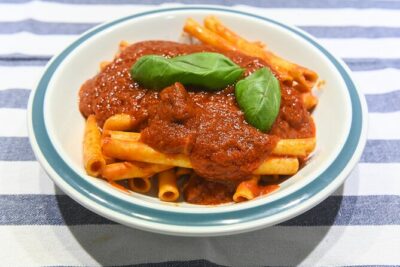
- Two Iconic Roman Sauces: Cacio e Pepe and Amatriciana
- Cacio e Pepe
- Amatriciana
- The Jewish Ghetto Angle: Food With a Story Attached
- Wine and Water During the Class (Yes, It’s Part of the Experience)
- What the Meal Feels Like at the Table
- Dietary Options and Allergens: A Real-World Check Before You Book
- Who Should Book This Pasta Class?
- Practical Stuff: Timing, Location, and Comfort
- Should You Book This Pasta Class?
- FAQ
- How long is the Rome pasta cooking class?
- What is the group size for the class?
- Is wine included?
- Can vegans and vegetarians join?
- Is this a kosher experience?
- Is it suitable for gluten allergies?
Why This Pasta Class Works So Well in Rome
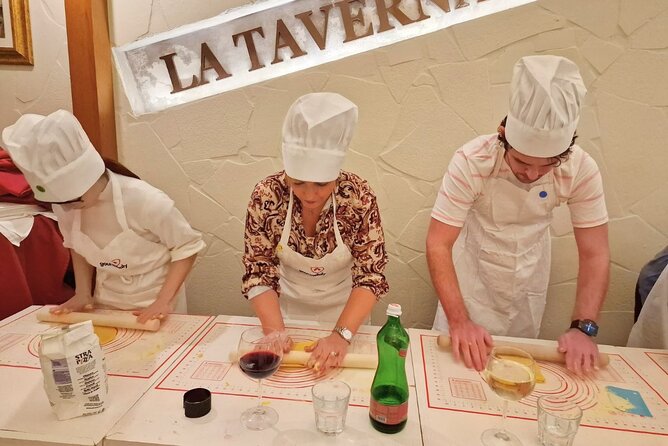
This isn’t a generic cooking show. It’s a structured, guided meal experience that mixes kitchen skills with food storytelling. You meet in the Jewish Ghetto area (near Via del Portico d’Ottavia, 8) and the class takes place in an ancient eatery in a building dating back to the 12th century, the kind of place you’d expect to see on TV.
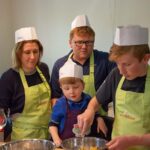
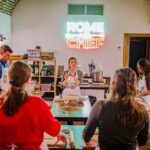
The group size matters. With only 10 participants, your host can actually help during the dough, during the sauces, and during the little moments that usually get skipped in larger classes. You also get translation support in English, which is key because the chef’s directions and the history talk both matter here.
And yes, you eat well. Your menu is built so that what you cook basically covers dinner—plus dessert—so you’re not left hunting for food afterward.
What You Get for $104.25: Value That’s Easy to See
At $104.25 per person for about 2 hours 30 minutes, the price only feels “high” if you compare it to a quick street-food bite. But compared to what’s included, it makes sense.
Here’s what you’re paying for:
- A professional chef-led class (including equipment and ingredients)
- All drinks: wine and water served during the session
- Multiple components: homemade pasta + fried seasonal starter + two sauces + dessert
- A 100% cotton apron plus a free cookbook and restaurant guide
Cooking classes in Rome can range wildly, and a lot of them feel like you buy a seat for a meal. This one is more like a kitchen lesson that ends as a full dinner.
You can also read our reviews of more tours and experiences in Rome.
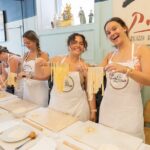
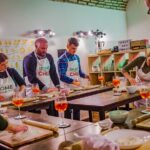
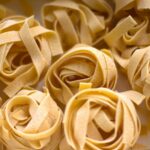
The Setting: Piazza Mattei and a 12th-Century Restaurant Room
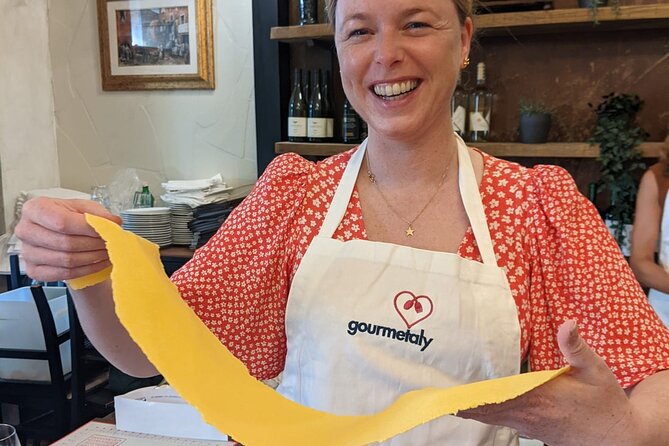
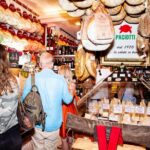
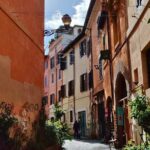
You start in the Jewish Ghetto area, meeting at Via del Portico d’Ottavia, 8, 00186 Roma RM. From there, you’ll be guided into the neighborhood’s food atmosphere, with your host sharing tips, history, and legends tied to the district and its unique food style.
Then comes the practical magic: the kitchen is inside an old eatery in a building that dates to the 12th century. That sounds like trivia until you’re sitting there with flour on your hands. The place adds weight to what you’re learning. Rome isn’t just about modern restaurants; it’s about food habits that have survived for centuries—and you can feel that during the class.
If you like a mix of culture and hands-on cooking, this is a strong fit.
Meet Your Host and Chef Gabriele: Translation + Food Storytelling
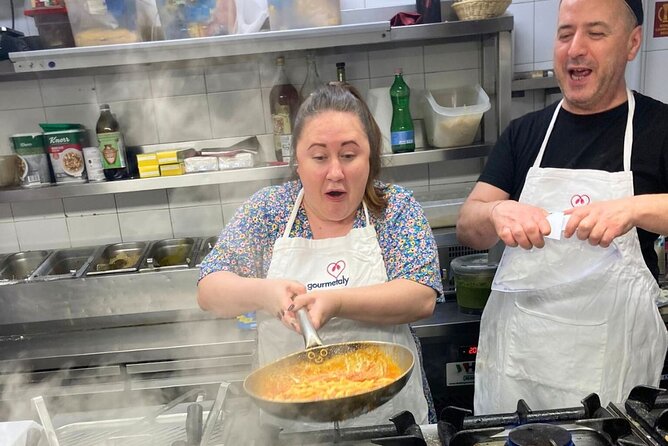
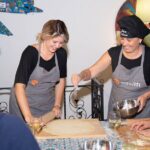
In a small class, your guide is more than a checker at the door. This experience is designed around your host helping for everything: translating for the chef, adding context, and making sure you can follow along in English.
Chef Gabriele is a big part of the personality. The teaching style is hands-on and practical, and he’s known for being engaging, with enough humor to keep the energy light even when the pasta gets tricky. You’ll also notice that patience matters. Learning fresh pasta is physical work—dough texture, timing, and technique—so it helps when someone can slow things down and explain without rushing you.
The Hands-On Pasta Lesson: Dough, Shape, and Timing
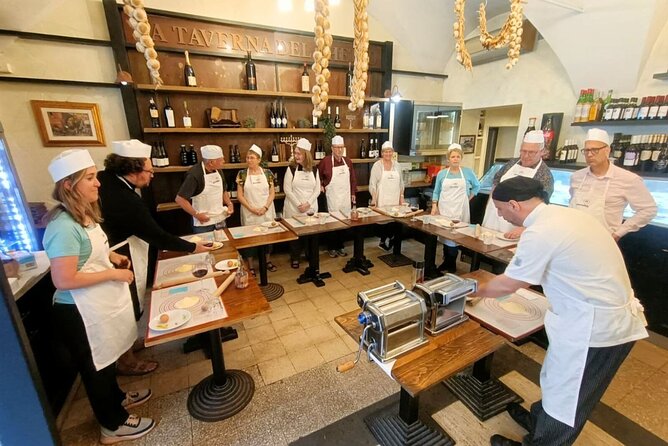
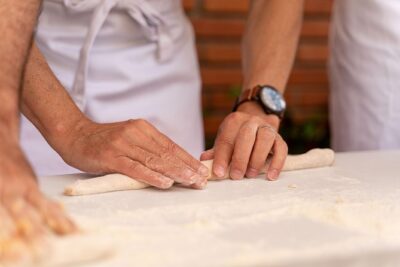
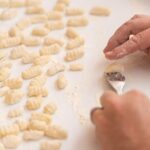
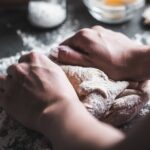
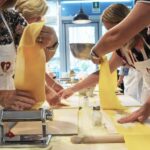
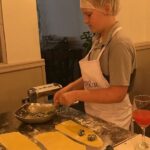
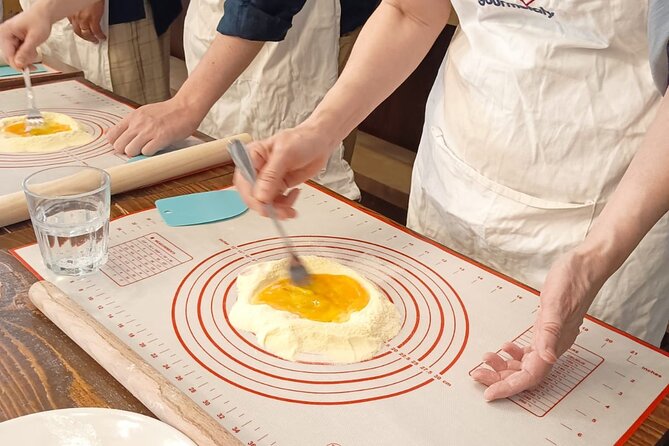
The core of the class is making homemade Roman pasta from scratch. You’ll work through the process yourself instead of watching from the side.
Expect this rhythm:
- Get your station and tools set
- Make the dough and work it into pasta
- Cook your pasta under the chef’s supervision
Roman pasta is built around the sauces. That’s why your pasta lesson isn’t separate from the menu. The chef teaches in a way that connects how you roll or shape the pasta to how the sauce clings and tastes.
And since this is in a small group, your host can help with the practical steps when language gets in the way.
Fried Roman Bites: Artichokes and Zucchini Flowers
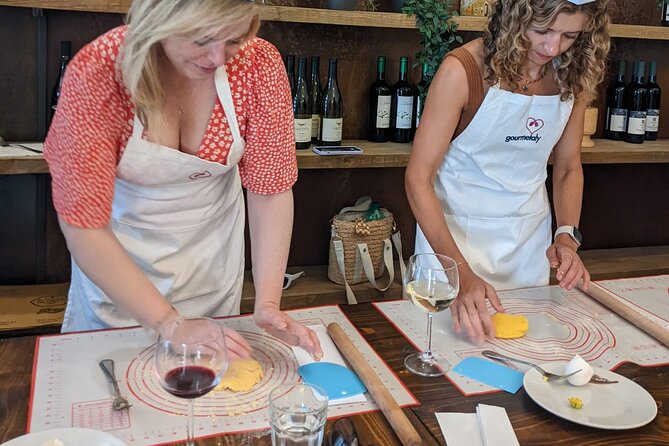
Before the main sauces, you’ll prepare seasonal fried specialties. This is one of those “only in Rome” moments that’s both fun and delicious.
Depending on the season, you’ll tackle:
- Fried artichoke (winter)
- Stuffed zucchini flower with mozzarella and anchovie (summer)
These aren’t just appetizers you eat. You’ll clean and prep vegetables, then handle frying steps like a real kitchen participant. It’s a sensory lesson—smell, timing, and texture—and it breaks up the class so you don’t feel stuck at the pasta table the whole time.
If you’re traveling with kids, this part is often the most memorable because it’s visual and hands-on.

Two Iconic Roman Sauces: Cacio e Pepe and Amatriciana
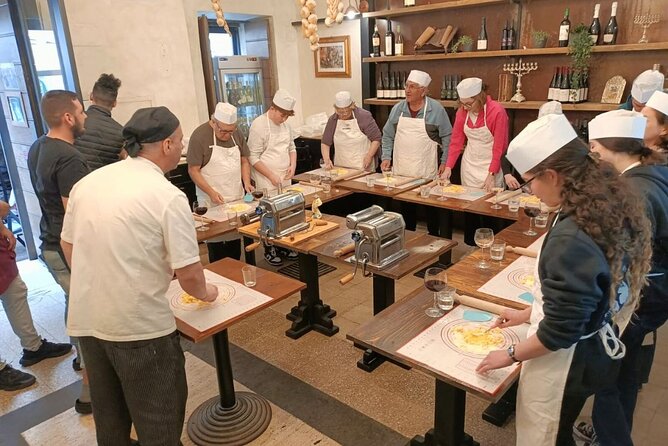
This is where the class becomes truly Roman.
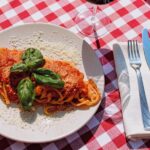
You’ll make two kinds of sauce from fresh ingredients, then cook pasta to match. The signatures on the menu are:
Cacio e Pepe
A Roman classic built on pecorino romano cheese and black pepper. It’s simple on paper. In real life, it requires the right technique so the cheese and pepper form a creamy sauce without turning oily or grainy.
Amatriciana
Another Roman favorite, using pecorino romano cheese, guanciale, and tomato sauce. You learn how the flavor base works and how to balance richness with the acidity of tomato.
This pairing is a smart learning choice. You go from a cheese-and-pepper sauce to a pork-and-tomato sauce, so you understand how Roman cooking uses both intensity and restraint.
There’s also tonnarelli all’arrabbiata on the menu, a tomato-chili-parsley style that rounds out the meal, especially if you prefer something with a little more bite.
The Jewish Ghetto Angle: Food With a Story Attached
This class isn’t only about cooking. Your host also shares legends and history connected to the Jewish Ghetto of Rome and the local food style.
What that means in practice is you get context while you work:
- why certain flavors show up
- why certain ingredients mattered
- how regional food habits took shape in this district
In short: it helps your dinner feel like part of Rome, not just a meal you ate somewhere in Rome.
One note: the restaurant and food provided are not kosher. That’s not a problem for everyone, but it matters if kosher standards are part of your travel needs.
Wine and Water During the Class (Yes, It’s Part of the Experience)
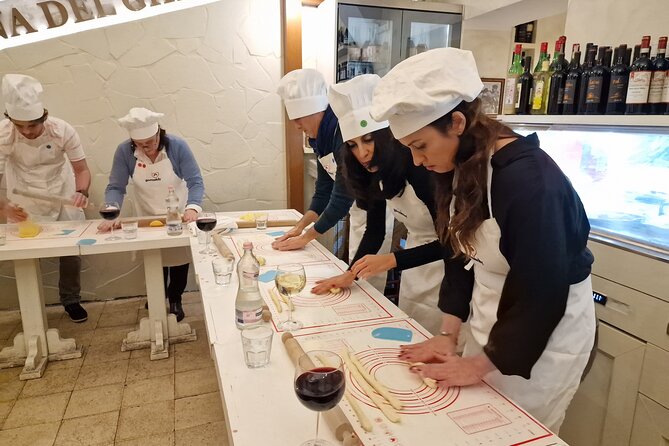
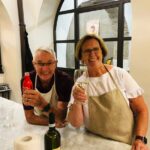
Wine and water are served all along the cooking class, and it’s described as free-flowing. That changes the vibe. You’re not in “quiet cooking school” mode. You’re in “work together, taste as you go, and relax” mode.
It also helps explain why the table gets social. A few guides bring humor into the moment, and you might even get a singalong vibe depending on the group and energy in the room (that part isn’t guaranteed, but it’s in the mix).
Practical tip: if you’re sensitive to alcohol or have a tight dinner plan afterward, pace yourself. This is a 2.5-hour session, and the wine is intentionally part of it.
What the Meal Feels Like at the Table
Once your cooking is done, you sit down and taste:
- what you made
- the seasonal fried specialty
- sauces paired with the pasta
- and dessert
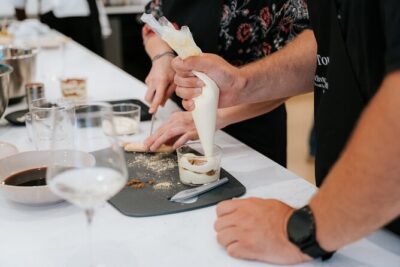
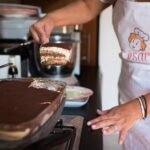
Dessert is ricotta cheesecake with black sour cherry jam (torta di ricotta e visciole). You don’t just get a sweet ending—you get a proper plated finish.
Since the food portion is designed to cover dinner, you can plan the rest of your night without stressing about finding a second meal.
Dietary Options and Allergens: A Real-World Check Before You Book
This experience can accommodate vegans and vegetarians, and it can also handle vegetarian-style pasta sauce options (for no-pork eaters, the menu mentions a tomato-chili-parsley sauce).
But here’s the caution that matters: you’re dealing with a real kitchen where ingredients include common allergens. The class notes that these allergens can be present in tastings:
- milk
- eggs
- soya
- mustard
- nuts
- gluten
It’s also stated as not recommended for anyone allergic to gluten. If gluten is an issue for you, I’d treat this as a “probably not” until you confirm. And if you need strict accommodations, the info says special food requirements can’t be guaranteed. That means you should book only if your comfort level matches those limits.
Finally, remember: it’s not kosher.
Who Should Book This Pasta Class?
I’d point you here if:
- you want a real cooking lesson in Rome, not a tasting-only food tour
- you like Roman classics like cacio e pepe and amatriciana
- you travel with kids and want something interactive
- you want a small group (only 10), so questions and help actually happen
- you enjoy pairing food with neighborhood stories—especially around the Jewish Ghetto
I’d think twice if:
- gluten is a medical issue
- you need strict, guaranteed dietary accommodations
- you want a quiet, no-wine experience
Practical Stuff: Timing, Location, and Comfort
The session runs about 2 hours 30 minutes. You start at Via del Portico d’Ottavia, 8 and the tour ends back at the meeting point.
It operates in all weather conditions, so dress like you’re spending real time outside the kitchen environment. Since you’ll be cooking, also think about comfortable shoes. You’ll be moving around your station.
You’ll get a mobile ticket, and the class is offered in English. It’s near public transportation, so you won’t need a car to make it work.
And you’ll leave with a practical souvenir: the cotton apron, plus the free cookbook and a “best restaurants” guide.
Should You Book This Pasta Class?
If you’re the kind of traveler who likes to learn a skill you can repeat later, book it. This class isn’t just about eating Roman food—it’s about understanding how Roman sauces work with homemade pasta, while you also get context from the Jewish Ghetto area and a chef who makes the process fun.
It’s also a good choice for value. Between the ingredients, wine, dessert, and the apron/cookbook, you’re getting a full evening package for your money, not just a small portion and a stamp in your passport.
Just don’t ignore the allergen and non-kosher notes. If those don’t fit your needs, you’ll end up stressed instead of enjoying the lesson.
FAQ
How long is the Rome pasta cooking class?
It lasts about 2 hours 30 minutes.
What is the group size for the class?
The class is limited to a maximum of 10 travelers.
Is wine included?
Yes. Wine and water are served during the cooking class.
Can vegans and vegetarians join?
Yes, workshops can accommodate vegans and vegetarians, and vegetarian sauce options are part of the menu.
Is this a kosher experience?
No. The restaurant and food provided are not kosher.
Is it suitable for gluten allergies?
It is not recommended for allergic to gluten, and gluten may be present in tastings.
If you want, tell me your dietary needs (especially gluten, dairy, pork) and I’ll help you sanity-check whether this menu fits.